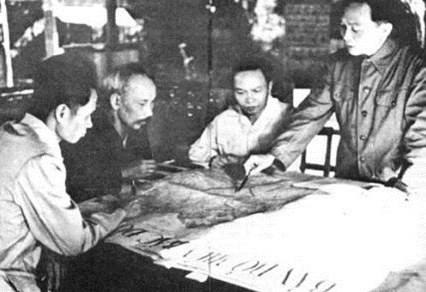
After 8 years of arduous and victorious resistance, by early 1953, the balance of power between the French Expeditionary Corps and the Vietnam People's Army had entered the preparatory stage for a decisive confrontation. However, the general orientation for the "1953-1954 Winter-Spring campaign" of the Vietnam Workers' Party leadership remained only in the broadest of outlines. The Central Committee's conference early in the year concluded that the delta was the enemy's hard spot, and the direction of combat would be to "temporarily avoid the strong points and strike the weak ones"; it was necessary to disperse the opponent's main forces, which were largely concentrated in the delta, in order to destroy them piece by piece, and to choose strategic directions where the enemy was exposed but which were important enough to "force them to disperse their forces to cope with us in critical locations that they cannot abandon"35.
Sau 8 năm kháng chiến gian khổ và thắng lợi, đến đầu năm 1953, tương quan giữa quân đội viễn chinh Pháp và quân đội nhân dân Việt Nam đã bước sang giai đoạn chuẩn bị cho cuộc đối đầu quyết định. Tuy nhiên, định hướng chung cho “cuộc chiến Đông xuân 1953-1954” của lãnh đạo Đảng Lao Động Việt Nam lại mới ở những nét phác thảo đại cương nhất. Hội nghị họp đầu năm của Ban chấp hành Trung ương nhận định rằng đồng bằng là chỗ rắn của địch, và hướng chiến đấu sẽ là “tạm thời tránh chỗ mạnh đánh chỗ yếu”, phải phân tán khối chủ lực của đối phương đang tập trung phần lớn ở đồng bằng để tiêu diệt từng bộ phận, phải chọn hướng chiến lược địch sơ hở nhưng lại là hướng quan trọng để “buộc chúng phải phân tán lực lượng đối phó với ta trên những địa điểm xung yếu mà chúng không thể bỏ”35.
Après 8 années d'une résistance ardue et victorieuse, au début de l'année 1953, le rapport de force entre le Corps expéditionnaire français et l'Armée populaire du Vietnam entra dans la phase préparatoire d'un affrontement décisif. Cependant, l'orientation générale de la « campagne d'hiver-printemps 1953-1954 » voulue par la direction du Parti des travailleurs du Vietnam ne se dessinait encore qu'à grands traits. La conférence du Comité central qui se tint au début de l'année conclut que le delta constituait le point fort de l'ennemi, et que la directive de combat serait d'« éviter temporairement les points forts et de frapper les points faibles » ; il fallait disperser les forces principales de l'adversaire, en grande partie concentrées dans le delta, afin de les détruire pièce par pièce, et choisir des directions stratégiques où l'ennemi était vulnérable mais qui revêtaient une importance suffisante pour « le forcer à disperser ses forces afin de nous faire face dans des endroits vitaux qu'il ne peut abandonner »35.
By the time the Politburo held a conference in September 1953, the Nà Sản fortified complex, which had previously been the intended target to concentrate forces to destroy, had been evacuated by the French. At this time, in the entire Northwest region, the French troops were only garrisoned in Lai Châu. This was an important strategic region, directly linked to Upper Laos; if an attack was launched into the Northwest, the French army would have no choice but to send troops up to counter it, and thus Vietnam would achieve all of its strategic objectives: destroying the enemy, liberating territory, and above all, forcing the enemy to disperse their forces34.
Cho đến tháng 9 năm 1953, Bộ Chính trị họp hội nghị thì Tập đoàn cứ điểm Nà Sản là mục tiêu từng dự kiến sẽ tập trung lực lượng để tiêu diệt, quân Pháp đã rút bỏ. Lúc này, cả vùng Tây Bắc quân Pháp chỉ còn đóng quân lại ở Lai Châu. Đây là vùng chiến lược quan trọng, liên quan trực tiếp đến Thượng Lào, nếu đánh lên Tây Bắc, quân Pháp không thể không đưa quân lên đối phó, như vậy Việt Nam sẽ đạt được cả mục tiêu chiến lược: tiêu diệt địch, giải phóng đất đai và nhất là buộc địch phải phân tán lực lượng34.
Au moment où le Bureau politique tint une conférence en septembre 1953, le camp retranché de Nà Sản, qui avait été précédemment la cible prévue pour concentrer les forces en vue de le détruire, avait été évacué par les Français. À cette époque, dans toute la région du Nord-Ouest, les troupes françaises ne tenaient plus garnison qu'à Lai Châu. Il s'agissait d'une région stratégique importante, directement liée au Haut-Laos ; si une attaque était lancée dans le Nord-Ouest, l'armée française n'aurait d'autre choix que d'y envoyer des troupes pour riposter, et ainsi le Vietnam atteindrait tous ses objectifs stratégiques : détruire l'ennemi, libérer le territoire, et par-dessus tout, contraindre l'ennemi à disperser ses forces34.
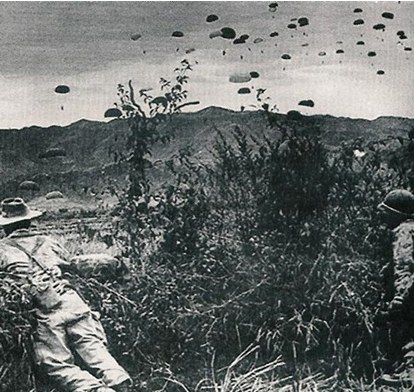
With the above orientation, although the specific time and location of combat operations had not been confirmed, logistical preparations had already begun. From July 1953, the Frontline Support Committee (also known as the Front Supply Council) was established to directly assist the Central Committee in mobilizing manpower and material resources for the front. The Committee was directly led by Deputy Prime Minister Phạm Văn Đồng. The Committee was responsible for directing the construction and repair of roads, and communications connecting all directions to the frontline. In November, French troops massively parachuted into Điện Biên Phủ. The conference disseminating the Autumn-Winter operational plan at the General Headquarters in Việt Bắc decided that the main direction of attack for the coming year would be the Northwest, aiming to liberate Lai Châu. It also added the tasks of closely monitoring the enemy in Điện Biên Phủ, preparing the battlefield, seizing favorable opportunities, and destroying the enemy when they had only temporarily occupied their positions34.
Với định hướng như trên, tuy chưa khẳng định được thời gian và địa điểm tác chiến cụ thể nhưng công tác chuẩn bị hậu cần đã bắt đầu. Từ tháng 7 năm 1953, Uỷ ban chi viện tiền tuyến (còn gọi là Hội đồng cung cấp mặt trận) được thành lập, trực tiếp giúp Trung ương huy động sức người, sức của ra mặt trận. Ủy ban do Phó Thủ tướng Phạm Văn Đồng trực tiếp lãnh đạo. Ủy ban chịu trách nhiệm chỉ đạo làm đường, sửa đường, thông tin liên lạc nối liền bốn phương với tiền tuyến. Tháng 11, quân Pháp nhảy dù ào ạt xuống Điện Biên Phủ. Hội nghị phổ biến kế hoạch tác chiến Thu Đông ở Tổng hành dinh tại Việt Bắc quyết định hướng tấn công chính trong năm tới sẽ là Tây Bắc, nhằm giải phóng Lai Châu. Bổ sung thêm nhiệm vụ bám sát địch ở Điện Biên Phủ, chuẩn bị chiến trường, tranh thủ thời cơ có lợi, diệt địch khi chúng mới lâm thời chiếm lĩnh trận địa34.
Forts de cette orientation, bien que l'heure et le lieu précis des opérations de combat n'eussent pas encore été fixés, les préparatifs logistiques avaient déjà commencé. Dès juillet 1953, le Comité de soutien à la ligne de front (également connu sous le nom de Conseil d'approvisionnement du front) fut créé pour aider directement le Comité central à mobiliser les ressources humaines et matérielles destinées au front. Ce Comité était dirigé directement par le vice-Premier ministre Phạm Văn Đồng. Il était chargé de diriger la construction et la réparation des routes, ainsi que les communications reliant toutes les directions à la ligne de front. En novembre, les troupes françaises furent massivement parachutées sur Điện Biên Phủ. La conférence diffusant le plan d'opérations d'automne-hiver au Grand Quartier général du Việt Bắc décida que la direction principale de l'attaque pour l'année à venir serait le Nord-Ouest, avec pour objectif de libérer Lai Châu. Elle y ajouta également les tâches consistant à surveiller étroitement l'ennemi à Điện Biên Phủ, à préparer le champ de bataille, à saisir les occasions favorables et à détruire l'ennemi lorsqu'il n'occuperait encore que temporairement ses positions34.
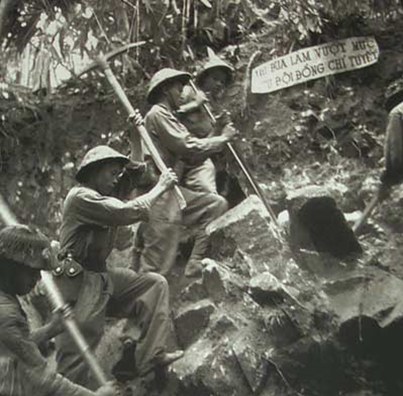
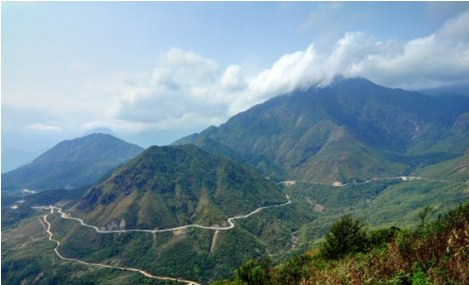
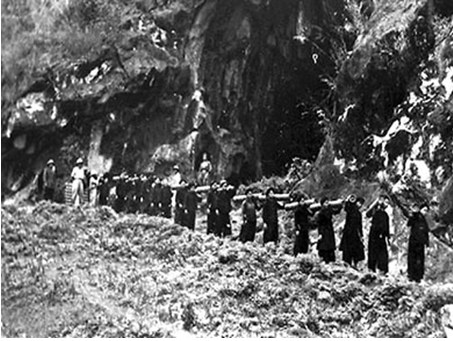
Immediately afterward, regiment 176 of division 316, together with local armed forces, conducted anti-bandit operations to prepare the Northwest battlefield. Thousands of bandits were killed and captured along Route 41, from the left bank of the Mã River to the right bank of the Đà River, clearing the advance route to the Northwest before winter. During the summer and autumn months, tens of thousands of civilian porters and Youth Volunteers from both the free zones and temporarily occupied areas, along with combat engineers, repaired hundreds of km of roads to the Northwest. Sections of previously eroded, precarious, and treacherous trails strictly for pedestrians were widened, straightened, and lowered in elevation34.
Ngay sau đó, trung đoàn 176 của đại đoàn 316 cùng lực lượng vũ trang địa phương đã tiến hành hoạt động tiễu phỉ để chuẩn bị chiến trường Tây Bắc. Hàng ngàn thổ phỉ bị diệt và bắt dọc theo tuyến đường 41, từ tả ngạn sông Mã đến hữu ngạn sông Đà, khai thông đường tiến quân lên Tây Bắc trước mùa đông. Trong những tháng hè thu, hàng vạn dân công và thanh niên xung phong ở cả vùng tự do và vùng tạm bị chiếm cùng với công binh tiến hành sửa hàng trăm km đường lên Tây Bắc. Từng đoạn đường mòn trước đây sụt lở, cheo leo, hiểm trở chỉ dành cho người đi bộ được mở rộng, nắn thẳng, hạ thấp độ cao34.
Immédiatement après, le régiment 176 de la division 316 mena, avec les forces armées locales, des opérations de lutte contre les bandits pour préparer le champ de bataille du Nord-Ouest. Des milliers de bandits furent tués ou capturés le long de la route 41, de la rive gauche de la rivière Mã à la rive droite de la rivière Đà, dégageant ainsi la voie d'avancée vers le Nord-Ouest avant l'hiver. Au cours des mois d'été et d'automne, des dizaines de milliers de porteurs civils (dân công) et de Jeunes Volontaires venus tant des zones libres que des zones temporairement occupées, aux côtés du génie militaire, réparèrent des centaines de km de routes menant au Nord-Ouest. Des tronçons de pistes autrefois ravinés, précaires et dangereux, strictement réservés aux piétons, furent élargis, redressés et abaissés en altitude34.
On December 6, 1953, the General Military Commission reported its resolve to the Politburo and was approved by the Politburo to concentrate troop strength and firepower, preparing to launch an offensive campaign to destroy the Điện Biên Phủ fortified complex. Battlefield preparation, first and foremost the opening and repairing of roads, was accelerated in time for artillery towing vehicles and supplies to open the campaign in late January 1954. By early December, the roads were only sufficient for the campaign to liberate Lai Châu. By mid-December, engineer units, together with thousands of civilian porters and Youth Volunteers, had cleared 2/3 of the Tuần Giáo – Điện Biên route, reaching km 60, but it was not yet up to the technical standards for motorized transport vehicles for resupply and artillery towing. To carry out the resolve to destroy the enemy at Điện Biên Phủ, a series of tasks needed to be recalculated and supplemented, not only to clear the remaining section of the Tuần Giáo – Điện Biên route but also to ensure higher road quality for a major campaign34.
Ngày 6 tháng 12 năm 1953, Tổng Quân uỷ báo cáo quyết tâm với Bộ Chính trị và được Bộ Chính trị phê chuẩn tập trung binh lực, hoả lực, chuẩn bị mở chiến dịch tiến công tiêu diệt tập đoàn cứ điểm Điện Biên Phủ. Công tác chuẩn bị chiến trường trước hết là việc mở đường và sửa đường được đẩy nhanh kịp cho xe kéo pháo và tiếp tế mở màn chiến dịch vào cuối tháng 1 năm 1954. Đến đầu tháng 12, đường mới đủ chuẩn bị cho chiến dịch giải phóng Lai Châu. Đến trung tuần tháng 12, các đơn vị công binh đã cùng hàng ngàn dân công và thanh niên xung phong thông đường được 2/3 quãng đường Tuần Giáo – Điện Biên, đến km 60, nhưng chưa đủ tiêu chuẩn kỹ thuật cho xe cơ giới vận tải tiếp tế, xe kéo pháo. Thực hiện quyết tâm tiêu diệt địch ở Điện Biên Phủ, một loạt công việc cần được tính toán lại và bổ sung không những nhằm khai thông nốt đoạn đường Tuần Giáo – Điện Biên còn lại mà còn phải bảo đảm chất lượng đường cao hơn cho một chiến dịch lớn34.
Le 6 décembre 1953, la Commission militaire générale fit part de sa détermination au Bureau politique et reçut l'approbation de ce dernier pour concentrer les effectifs et la puissance de feu, en préparation du lancement d'une campagne offensive visant à détruire le camp retranché de Điện Biên Phủ. La préparation du champ de bataille, et en premier lieu l'ouverture et la réfection des routes, s'accéléra afin que les véhicules tracteurs d'artillerie et de ravitaillement soient prêts pour l'ouverture de la campagne à la fin de janvier 1954. Au début du mois de décembre, les routes n'étaient suffisantes que pour la campagne de libération de Lai Châu. À la mi-décembre, les unités du génie, avec l'aide de milliers de porteurs civils (dân công) et de Jeunes Volontaires, avaient dégagé les 2/3 de l'itinéraire Tuần Giáo – Điện Biên, atteignant le km 60, mais la route ne répondait pas encore aux normes techniques exigées pour les véhicules de transport motorisés de ravitaillement et de traction d'artillerie. Pour mettre en œuvre la volonté de détruire l'ennemi à Điện Biên Phủ, une série de tâches dut être recalculée et complétée, non seulement pour dégager le tronçon restant de la route Tuần Giáo – Điện Biên, mais également pour garantir une qualité de voie supérieure en vue d'une campagne d'envergure34.
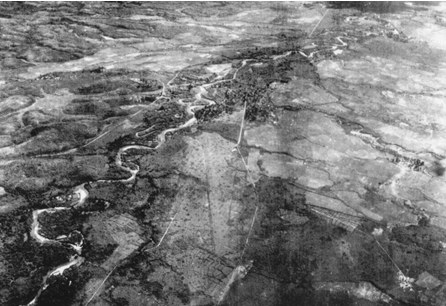
Điện Biên Phủ is located on the Mường Thanh valley floor, formerly belonging to Điện Biên District, Lai Châu Province. It is a relatively flat valley, approximately 23 km long, with an average width of 7 km to 9 km, and a total area of about 120km2. During the final stage of the resistance war against the French, with its strategic position in the Northwest region as the convergence point of routes connecting the borders of Laos, Thailand, Burma, China, and Vietnam, it became the terrain for the strategic clash in Indochina. For the French Expeditionary Corps, this area was large enough to construct an airfield and allowed artillery and tanks to maximize their firepower. For the Vietnam People's Army, this was a mountainous forest region bordering revolutionary base areas, allowing the mobilization and concealment of infantry forces. The greatest common challenge for both sides was the logistical work serving the campaign, including transportation, distribution, and serving a large volume of soldiers across dispersed areas and fragmented terrain with severely lacking infrastructure.
Điện Biên Phủ nằm trên cánh đồng Mường Thanh trước đây thuộc huyện Điện Biên, tỉnh Lai Châu, là một thung lũng tương đối bằng phẳng, chiều dài khoảng 23 km, chiều rộng trung bình 7 km đến 9 km, tổng diện tích khoảng 120km2. Vào giai đoạn cuối của cuộc kháng chiến chống Pháp, với vị trí chiến lược ở vùng Tây Bắc là nơi hội tụ của các chặng đường nối biên giới Lào, Thái Lan, Miến Điện, Trung Quốc và Việt Nam, nơi đây đã trở thành địa bàn để tiến hành cuộc giao tranh chiến lược ở Đông Dương. Đối với quân Viễn chinh Pháp, địa bàn này đủ lớn để xây dựng sân bay và cho phép pháo binh, xe tăng phát huy hoả lực. Đối với quân đội Nhân dân Việt Nam, đây là vùng rừng núi, giáp ranh các căn cứ địa cách mạng, cho phép huy động và che dấu lực lượng bộ binh. Điểm thách thức lớn nhất chung với cả hai bên chính là công tác hậu cần phục vụ chiến dịch bao gồm cả vận chuyển, phân phối, phục vụ cho khối lượng lớn binh sỹ trên địa bàn phân tán và địa hình chia cắt, cơ sở hạ tầng thiếu thốn.
Điện Biên Phủ se trouve au fond de la vallée de Mường Thanh, appartenant autrefois au district de Điện Biên, dans la province de Lai Châu. C'est une vallée relativement plate, d'environ 23 km de long, d'une largeur moyenne de 7 km à 9 km, et d'une superficie totale d'environ 120 km2. Lors de la phase finale de la guerre de résistance contre les Français, grâce à sa position stratégique dans la région du Nord-Ouest en tant que point de convergence des routes reliant les frontières du Laos, de la Thaïlande, de la Birmanie, de la Chine et du Vietnam, elle devint le terrain de l'affrontement stratégique en Indochine. Pour le Corps expéditionnaire français, cette zone était suffisamment vaste pour y construire un aérodrome et permettait à l'artillerie et aux chars de maximiser leur puissance de feu. Pour l'Armée populaire du Vietnam, il s'agissait d'une région forestière et montagneuse limitrophe des zones de base révolutionnaires, ce qui permettait la mobilisation et la dissimulation des forces d'infanterie. Le défi majeur et commun aux deux camps était la logistique de la campagne, comprenant le transport, la distribution et l'entretien d'un grand nombre de soldats répartis sur des zones dispersées et un terrain morcelé, où les infrastructures faisaient gravement défaut.
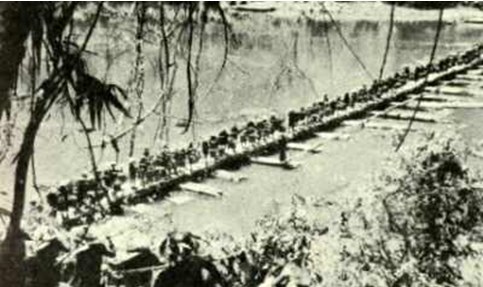
To overcome this difficulty, each side had solutions based on their own advantages and sought to sabotage and deepen the weaknesses of their opponent. The French army relied entirely on air transport, banking on their absolute advantage in transportation, supplying the fortified complex via airdrops and the use of 2 field airstrips. At the same time, they planned to use their powerful air force to fiercely bomb the opponent's transport system. The Vietnamese side relied primarily on road transport, utilizing both automobiles and rudimentary vehicles, intending to take advantage of the ability to supply logistics on site, both through the agricultural products of farmers and by exploiting military equipment captured from the enemy. On the other hand, they would heavily utilize artillery forces to destroy the airfields and mobilize anti-aircraft forces to suppress the opponent's airdrop capabilities. That was the strategic panorama of the logistical war that would unfold fiercely between the two sides.
Để khắc phục khó khăn này, mỗi bên đều có giải pháp dựa trên lợi thế của mình và tìm cách phá hoại, khoét sâu thế yếu của đối phương. Quân Pháp dựa hoàn toàn vào vận tải đường không, trông vào lợi thế tuyệt đối về vận chuyển, cung cấp cho tập đoàn cứ điểm bằng thả dù và sử dụng 2 sân bay dã chiến. Đồng thời dự kiến dùng lực lượng không quân mạnh mẽ oanh tạc quyết liệt hệ thống vận tải của đối phương. Phía Việt Nam dựa chủ yếu vào vận tải đường bộ, sử dụng cả ô tô và phương tiện thô sơ, dự định tận dụng khả năng cung cấp hậu cần tại chỗ, cả bằng nông sản của nông dân, cả nhờ khai thác quân cụ lấy được của địch. Mặt khác, sử dụng mạnh lực lượng pháo binh để phá huỷ sân bay và huy động lực lượng phòng không để chế áp khả năng thả dù của đối phương. Đó là toàn cảnh Chiến lược của cuộc chiến hậu cần sẽ diễn ra quyết liệt giữa hai bên.
Pour surmonter cette difficulté, chaque camp disposait de solutions reposant sur ses propres atouts et cherchait à saboter et à creuser les faiblesses de son adversaire. L'armée française s'appuyait entièrement sur le transport aérien, misant sur son avantage absolu en matière de transport, ravitaillant le camp retranché par des parachutages et par l'utilisation de 2 pistes d'atterrissage de campagne. Dans le même temps, elle prévoyait d'utiliser sa puissante force aérienne pour bombarder violemment le réseau de transport de l'adversaire. La partie vietnamienne s'appuyait quant à elle principalement sur le transport terrestre, utilisant à la fois des automobiles et des véhicules rudimentaires, avec l'intention de tirer parti de la capacité à se ravitailler sur place, tant grâce aux produits agricoles des paysans qu'en exploitant le matériel militaire pris à l'ennemi. D'autre part, elle utiliserait massivement les forces d'artillerie pour détruire les aérodromes et mobiliserait les forces antiaériennes pour neutraliser les capacités de parachutage de l'adversaire. Tel était le panorama stratégique de la guerre logistique qui allait se dérouler avec acharnement entre les deux belligérants.
General Navarre, in his book "Agony of Indochina" (Agonie de l'Indochine), remarked on the logistical issue at the Điện Biên Phủ strongpoint as follows: "This position is very difficult to reach by mountain trails. The Điện Biên Phủ valley is the most populous and prosperous in the Highlands. Rice production here is so abundant that it has the capacity to feed from 20,000 to 25,000 people. The airfield can be expanded significantly, with the potential to double or triple in size.
Tướng Nava trong cuốn sách Đông Dương hấp hối (Agonie de l’Indochine) đã nhận xét về vấn đề hậu cần ở cứ điểm Điện Biên Phủ như sau: “Vị trí này rất khó đến bằng đường mòn trên đồi núi. Cánh đồng Điện Biên Phủ đông dân, trù phú nhất miền Thượng du. Sản lượng lúa gạo tại đây rất thừa thãi có khả năng nuôi sống từ 20,000 tới 25,000 người. Phi trường có thể mở rộng rất nhiều, có khả năng gấp hai gấp ba lần.
Le général Navarre, dans son livre « Agonie de l'Indochine », fit la remarque suivante sur la question logistique au point d'appui de Điện Biên Phủ : « Cette position est très difficile à atteindre par les pistes de montagne. La vallée de Điện Biên Phủ est la plus peuplée et la plus prospère de la Haute Région. La production de riz y est si abondante qu'elle a la capacité de nourrir de 20 000 à 25 000 personnes. L'aérodrome peut être considérablement agrandi, avec la possibilité de doubler ou tripler de taille.
However, Điện Biên Phủ, in the circumstances we observed, presents a major aviation obstacle; it is far from the airfields in the Northern Delta, but this difficulty must be accepted; there is no other way.
Tuy nhiên Điện Biên Phủ, trong những trường hợp mà chúng tôi thấy, có một trở ngại lớn về hàng không, nó cách xa phi trường tại châu thổ BV, nhưng phải chấp nhận khó khăn này không có cách nào khác.
Cependant Điện Biên Phủ, dans les circonstances que nous avons observées, présente un obstacle aérien majeur ; il est éloigné des aérodromes du delta du Nord, mais il faut accepter cette difficulté ; il n'y a pas d'autre solution.
Furthermore, the long distance that poses an obstacle to our air force also poses an obstacle to the Viet Minh regarding resupply. Điện Biên Phủ is 200 km from the Delta, 300 km from the Chinese border, and there are no roads from the border to there, or if there are, they are easily destroyed. Therefore, if they attack Điện Biên Phủ, the Viet Minh must use civilian porters for resupply, whose capacity is strictly limited. In a May 1953 study on campaigns in the Highlands, General Salan expressed the opinion that the Viet Minh could not use many heavy weapons due to transportation difficulties1."
Vả lại đường xa gây trở ngại cho ta về không quân thì cũng gây trở ngại cho Việt Minh về tiếp liệu. Điện Biên Phủ cách Châu thổ 200 km, cách biên giới Trung Quốc 300 km, không có đường từ biên giới tới đó, hoặc nếu có cũng dễ bị phá hỏng. Vì thế nếu đánh Điện Biên Phủ, Việt Minh phải dùng dân công tiếp tế, khả năng giới hạn thôi. Trong một bài nghiên cứu tháng 5-1953 về các chiến dịch miền Thượng du, Tướng Salan đã nêu ý kiến rằng Việt Minh không thể dùng nhiều vũ khí nặng vì khó khăn về vận chuyển1.”
Par ailleurs, la longue distance qui constitue un obstacle pour notre aviation constitue également un obstacle pour le Viet Minh en matière de ravitaillement. Điện Biên Phủ se trouve à 200 km du Delta, à 300 km de la frontière chinoise, et il n'y a pas de routes depuis la frontière pour y accéder, ou s'il y en a, elles sont facilement détruites. Par conséquent, s'il attaque Điện Biên Phủ, le Viet Minh devra utiliser les porteurs civils (dân công) pour le ravitaillement, dont la capacité est strictement limitée. Dans une étude de mai 1953 sur les campagnes dans la Haute Région, le général Salan a émis l'opinion que le Viet Minh ne pourrait pas utiliser beaucoup d'armes lourdes en raison des difficultés de transport1. »
French Expeditionary Corps Colonel Jules Roy recounted: "His Chief of Staff (meaning Navarre - Author), his operations assistant, the technicians and specialists in his team all assured him that being so far from their bases, the Viet Minh could not station troops for long. In a certain tone with a slight sneer of contempt, the Deuxième Bureau officers informed him that for Mr. Giáp's divisions to survive, they needed rice, which civilian porters had to laboriously carry. Eating as they walked along the way, by the time they arrived, it would be almost entirely depleted, a completely futile effort15." American scholar Michael Maclear affirmed: "The French command thought that the Viet Minh had no trucks, no means to transport weapons, food, and other supplies to fight so far away from their rear. That was not at all absurd. It was a very reasonable thought16." French General Y. Gras in the book "History of the Indochina War" wrote: "...The attack on the fortified complex poses the problem of logistical resupply simultaneously with - if not prior to - the tactical problem. Is it possible to logistically sustain a major main force fighting so far from its rear? many - especially within the French general staff - thought that the Viet Minh could not accomplish that34."
Đại tá quân viễn chinh Pháp Giuyn Roa kể: “Tham mưu trưởng của ông (tức Nava - TG), viên phụ tá hành quân của ông, các kỹ thuật viên và các chuyên viên trong ê kíp của ông đểu khẳng định với ông là cách xa căn cứ của chúng đến thế thì Việt Minh không thể đóng quân lâu được. Bằng giọng chắc chắn với một thoáng bĩu môi khinh miệt, các sĩ quan phòng Nhì bảo cho ông biết là các đại đoàn của ông Giáp để sống được cần có gạo mà dân công phải khuân vác vất vả. Họ vừa đi vừa ăn dọc đường thì đến nơi gần như hết sạch, hoàn toàn uổng công15. Học giả Mỹ Maicơn Mắc Clia khẳng định: “Bộ chỉ huy Pháp nghĩ rằng Việt Minh không có xe tải, không có phương tiện vận chuyển vũ khí, lương thực và các đồ dùng khác để chiến đấu ở cách xa hậu phương đến như vậy. Điểu đó hoàn toàn không phải là ngớ ngẩn. Đó là một ý nghĩ rất hợp lý16”. Tướng Pháp Y. Gras trong cuốn “Lịch sử cuộc chiến tranh Đông Dương” viết: “...Cuộc tiến công tập đoàn cứ điểm đặt ra vấn đề hậu cần tiếp tế cùng một lúc - nếu không phải là đặt ra trước - vấn đề chiến thuật. Liệu có thể bảo đảm về mặt hậu cần cho một khối chủ lực quan trọng chiến đấu cách xa hậu phương của nó đến như vậy hay không? nhiều người - nhất là trong bộ tham mưu Pháp - cho rằng Việt Minh không thể làm được điều đó34.”
Le colonel Jules Roy du Corps expéditionnaire français raconta : « Son chef d'état-major (c'est-à-dire Navarre - N.d.A.), son adjoint aux opérations, les techniciens et les spécialistes de son équipe l'assuraient tous qu'étant si éloigné de ses bases, le Viet Minh ne pourrait y stationner ses troupes très longtemps. D'un ton assuré, avec une légère moue de mépris, les officiers du Deuxième Bureau l'informèrent que pour que les divisions de M. Giáp puissent survivre, elles avaient besoin de riz, que les porteurs civils (dân công) devaient transporter laborieusement. Mangeant en marchant le long de la route, à leur arrivée, il serait presque entièrement épuisé, un effort totalement vain15. » L'universitaire américain Michael Maclear affirma : « Le commandement français pensait que le Viet Minh n'avait pas de camions, pas de moyens pour transporter des armes, de la nourriture et d'autres fournitures pour se battre si loin de ses arrières. Cela n'était pas du tout absurde. C'était une réflexion très raisonnable16. » Le général français Y. Gras écrivit dans son livre « Histoire de la guerre d'Indochine » : « ... L'attaque du camp retranché pose le problème du ravitaillement logistique en même temps que - sinon avant - le problème tactique. Est-il possible de soutenir logistiquement une force principale majeure combattant si loin de ses arrières ? Beaucoup - particulièrement au sein de l'état-major français - pensaient que le Viet Minh ne pourrait pas réaliser cela34. »
Thus, alongside military territorial reasons, the difficult logistical supply capability for the Viet Minh forces was one of the crucial decisive factors that the French Command took into account to make the decision to accept this decisive confrontation at Điện Biên Phủ. The Vietnamese side, while clearly seeing their own difficulties, also sought ways to exploit the enemy's difficulties. The General Military Commission of the Vietnam People's Army concluded: "In conducting this very large campaign, we face many difficulties, but the greatest is the issue of supply, primarily the issue of roads"2. The Politburo of the Vietnam Workers' Party analyzed: "Điện Biên Phủ is a strong fortified complex of the enemy, but its fundamental weakness is being isolated; all reinforcements and resupplies rely on the air route"2.
Như vậy, bên cạnh những lý do về địa bàn quân sự thì khả năng cung cấp hậu cần khó khăn cho lực lượng Việt Minh là một trong những yếu tố quyết định quan trọng đã được Bộ Chỉ huy Pháp tính đến để ra quyết định chấp nhận cuộc đối đầu quyết định này ở Điện Biên Phủ. Phía Việt Nam trong khi thấy rõ khó khăn của mình cũng tìm cách khai thác những khó khăn của địch. Tổng Quân ủy Quân đội Nhân dân Việt Nam nhận định: “Tiến hành chiến dịch rất lớn này ta có nhiều khó khăn nhưng lớn nhất là vấn đề cung cấp, mà chủ yếu là vấn đề đường sá”2. Bộ Chính trị đảng Lao Động Việt Nam phân tích: “Điện Biên Phủ là một tập đoàn cứ điểm mạnh của địch nhưng có cái yếu cơ bản là bị cô lập, mọi việc tiếp viện, tiếp tế đều dựa vào đường không”2.
Ainsi, à côté des raisons territoriales militaires, la difficulté de ravitaillement logistique des forces du Viet Minh fut l'un des facteurs décisifs cruciaux que le commandement français prit en compte pour prendre la décision d'accepter cet affrontement décisif à Điện Biên Phủ. La partie vietnamienne, tout en voyant clairement ses propres difficultés, cherchait également les moyens d'exploiter celles de l'ennemi. La Commission militaire générale de l'Armée populaire du Vietnam conclut : « En menant cette très vaste campagne, nous sommes confrontés à de nombreuses difficultés, mais la plus grande réside dans la question du ravitaillement, et principalement dans le problème des routes »2. Le Bureau politique du Parti des travailleurs du Vietnam analysa la situation ainsi : « Điện Biên Phủ est un camp retranché puissant de l'ennemi, mais sa faiblesse fondamentale est d'être isolé ; tous les renforts et tous les ravitaillements reposent sur la voie aérienne »2.
General Võ Nguyên Giáp wrote: "On the Điện Biên Phủ front, the issue of supplying food, provisions, and ammunition was an extremely important factor, no less important than combat operations; the difficulties in supply were no less than the difficulties in combat. Logistics had to supply food and ammunition to a large force 500-700 km away from the rear over a long period, under conditions of difficult roads, lacking transportation means, and the enemy relentlessly attacking our supply routes. Furthermore, there was the weather; a rainstorm could cause more hindrance than an enemy bombing raid. Precisely because the supply problem was so difficult, the enemy could never have imagined that we could overcome this hardship"3. Thus, for the Vietnamese side, logistical difficulties were also the opponent's weakness that they intended to exploit, while their own logistics were considered an element of surprise for the enemy if overcome.
Tướng Võ Nguyên Giáp viết: “Trên mặt trận Điện Biên Phủ, vấn đề cung cấp lương thực, thực phẩm, đạn dược là một nhân tố vô cùng quan trọng, quan trọng không kém về tác chiến; khó khăn về cung cấp không kém khó khăn về tác chiến. Hậu cần phải cung cấp lương thực đạn dược cho một binh lực lớn ở xa hậu phương hàng 500-700 km trong một thòi gian dài, mà trong điều kiện đường sá khó khăn, phương tiện vận tải thiếu thốn, quân địch không ngừng đánh phá các tuyến đường cung cấp của ta. Lại còn thời tiết nữa, một trận mưa có thể gây trở ngại hơn một trận bom địch. Chính vì vấn đề cung cấp khó khăn như vậy, cho nên quân địch không bao giờ tưởng tượng được rằng chúng ta có thể khắc phục được khó khăn này”3. Như vậy, đối với phía Việt Nam, khó khăn tiếp vận cũng là điểm yếu của đối phương mà họ định khai thác, đồng thời hậu cần của mình được coi là điểm bất ngờ với địch nếu khắc phục được.
Le général Võ Nguyên Giáp écrivit : « Sur le front de Điện Biên Phủ, la question de l'approvisionnement en nourriture, en vivres et en munitions constituait un facteur extrêmement important, non moins essentiel que les opérations de combat ; les difficultés de ravitaillement n'étaient pas moindres que les difficultés inhérentes au combat. La logistique devait approvisionner en vivres et en munitions une force importante située à 500-700 km de l'arrière pendant une longue période, dans des conditions de routes difficiles, en manquant de moyens de transport, alors que l'ennemi pilonnait sans relâche nos voies de ravitaillement. Par ailleurs, il y avait les conditions météorologiques ; une forte averse pouvait causer plus d'entraves qu'un bombardement ennemi. C'est précisément parce que le problème du ravitaillement était si difficile que l'ennemi n'aurait jamais pu imaginer que nous parviendrions à surmonter cette épreuve »3. Ainsi, pour la partie vietnamienne, les difficultés logistiques constituaient également la faiblesse de l'adversaire qu'elle comptait bien exploiter, tandis que sa propre logistique était considérée comme un élément de surprise pour l'ennemi si elle parvenait à être maîtrisée.